How to Use a Massage Gun After Training (Step-by-Step)
A step-by-step guide to using a massage gun safely and effectively after Muay Thai, boxing, BJJ, or MMA training.
In this guide
The Fighters Shop is reader-supported. As an Amazon Associate we earn from qualifying purchases, at no extra cost to you. Learn more
A massage gun is one of the easiest recovery tools to misuse. Fighters buy one expecting instant relief, then either blast a sore muscle at max speed for five minutes straight or hover it directly over a bruised shin, which usually makes things worse, not better.
Used correctly, percussive therapy can help take the edge off muscle tightness and may support recovery between hard sessions, alongside proper sleep, hydration, and warm-ups. Used carelessly, it can aggravate bruises, irritate nerves, and leave you sorer than before you started. This guide walks through the technique coaches and physios generally recommend, so you get the benefit without the setbacks.
Step-by-step
Cool down first
Don’t reach for the massage gun straight off the pads or mats. Let your heart rate come down with a light walk or some easy stretching for five to ten minutes first. Using percussive therapy while you’re still breathing hard and your muscles are flooded with blood isn’t necessary and can feel uncomfortable.
Check for bruising or swelling before you start
Look over your shins, forearms, and any area that took repeated contact in sparring or clinch work. If there’s visible swelling, a hot spot, or a deep bruise forming, skip the massage gun on that area entirely that day. Driving percussion into fresh trauma can increase inflammation and slow healing.
Pick the right attachment
Use a flat or round ball head for large muscle groups like quads, hamstrings, and lats. Save fork attachments for areas that run alongside the spine, and avoid using pointed or bullet heads on anything except small, dense muscle knots away from bone. Most massage guns ship with two or three heads, which covers most needs.
Start on the lowest speed
Begin at the lowest intensity setting, even if the gun has six or eight speeds. You can always increase pressure by pressing the head in slightly harder; you don’t need to max out the motor speed to get a useful effect. High speed with heavy pressure on tight muscle is a common way people end up with bruising or next-day soreness.
Keep the gun moving, don't dig in one spot
Glide slowly over the muscle in one direction, then back, spending no more than one or two seconds in any single spot before moving on. Holding the head static on a knot for thirty seconds straight doesn’t speed anything up and raises the risk of tissue irritation. Think slow sweeping passes, like you’re painting the muscle, not drilling into it.
Limit each muscle group to 30-60 seconds
Work each major area, calves, quads, hamstrings, shoulders, for thirty to sixty seconds before moving to the next. A full-body pass usually takes ten to fifteen minutes. More time isn’t automatically better; diminishing returns set in fast, and overdoing it on a single muscle can leave it feeling worse the next day.
Avoid bone, joints, and the front of the shin
Stay off direct bone contact, the kneecap, ankle bones, elbow, and spine. For Muay Thai fighters, this means treating the shin carefully; the meaty calf and outer leg muscle are fair game, but the hard bony ridge down the front of the shin is not a target for percussive therapy. Fighters who condition their shins as part of training should read up on [a href=]how to condition your shins safely for Muay Thai[/a] to understand the difference between muscle recovery and bone conditioning.
Never use it directly on a new bruise or cut
If you’ve taken a hard leg kick or knuckle to the ribs and there’s a fresh bruise, leave that spot alone for at least 48-72 hours or until swelling has gone down. Using a massage gun on fresh soft-tissue trauma can worsen bleeding under the skin. Work around the area on unaffected muscle instead.
Breathe and relax into it
Tense muscles don’t respond as well to percussion. Take slow breaths and consciously relax the area you’re working on rather than bracing against the vibration. If a spot is genuinely painful rather than just tight, that’s a signal to back off, not push harder.
Finish with hydration and a normal cool-down
A massage gun isn’t a replacement for stretching, hydration, or sleep, it’s one piece of a recovery routine. Drink water, do some light static stretching if it feels good, and treat the massage gun as the finishing touch rather than the main event.
Common mistakes to avoid
- Using it immediately after impact-heavy sparring: Give bruises and swelling a day or two before running a massage gun over that area.
- Cranking the speed to max by default: Higher speed isn’t automatically better recovery, it’s just more force. Start low and adjust based on how the muscle actually feels.
- Holding the head static on one spot: This is the single most common way people bruise themselves with a massage gun. Keep it moving.
- Running it over joints, tendons, or bone: The knee, ankle, elbow, and spine aren’t muscle, and percussion there does little good and some potential harm.
- Using it as a substitute for a proper warm-up: A massage gun is a recovery tool, not a replacement for dynamic movement before training.
- Ignoring pain signals: Discomfort from muscle tightness is different from sharp or nerve-like pain. If something feels wrong, stop and check with a coach or medical professional.
Tips from the gym
Coaches who work with fighters in Muay Thai, boxing, and BJJ tend to agree on a few practical points that go beyond the basic technique.
- Use the massage gun on the muscles you use most for your sport. Boxers often focus on shoulders, lats, and forearms; Muay Thai fighters lean toward calves, hip flexors, and glutes; grapplers tend to carry tension in the traps, forearms, and lower back.
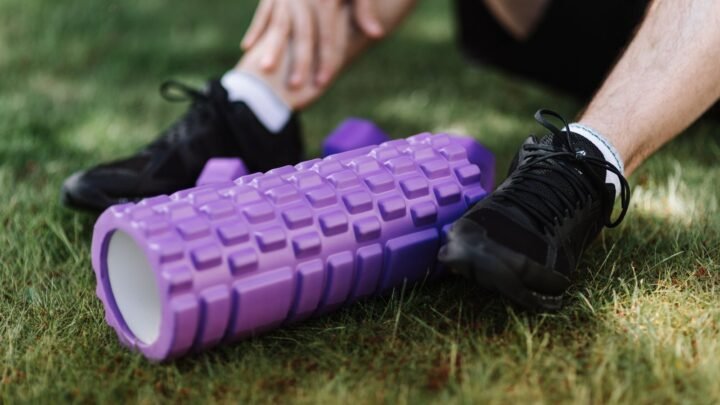
- Pair it with foam rolling rather than choosing one over the other. A foam roller works well for larger areas like the back and IT band, where a massage gun can be harder to angle correctly.
- Keep sessions short and frequent rather than long and occasional. Five to ten minutes after most training sessions beats one long thirty-minute session once a week.
- If you’re new to hard sparring or just started training, check in with your coach about what’s normal soreness versus something that needs rest, ice, or a look from a physio. A massage gun helps with muscle tightness, not injuries.
Recommended gear
A decent massage gun doesn’t need to be top-of-the-line, but a few features matter: adjustable speed settings, a stall-resistant motor, reasonable battery life, and at least two interchangeable heads.
The Top 10 Best Massage Guns for Recovery guide breaks down options across different budgets in more depth, but here are a few solid starting points:
- Theragun Prime – a well-known option with a quiet motor and ergonomic multi-grip handle, good for reaching your own back and shoulders.
- Hyperice Hypervolt 2 – lighter weight with a straightforward speed dial, popular for at-home use after training.
- Renpho R3 – a budget-friendly pick that still covers the basics of adjustable speed and swappable heads.
If you’re building out a full recovery kit for home, pair a massage gun with a foam roller for larger muscle groups the gun can’t reach as easily.
For fighters setting up a broader home recovery and training space, the Home Training hub and Recovery & Conditioning hub have more guides on building a routine that fits around your sport.
Frequently asked questions
Ten to fifteen minutes total across your major muscle groups is plenty for most people, spending thirty to sixty seconds per area. Longer sessions don’t add much benefit and can leave a muscle feeling irritated the next day.
No, avoid running a massage gun directly over fresh bruises or swelling. Wait until the bruise has started to fade and any tenderness has eased, usually a few days, before working around that area.
Stick to the calf muscle and outer leg muscle rather than the bony front edge of the shin. The shin bone itself isn’t muscle tissue, so percussive therapy doesn’t do much there and can be uncomfortable or counterproductive if you’re actively conditioning your shins.
Massage guns are generally more useful after training, once your heart rate has settled, rather than as a warm-up tool. A dynamic warm-up with movement is a better way to prepare muscles before sparring or drilling.
No, think of it as one tool among several. Foam rolling covers larger areas more evenly, static stretching addresses flexibility, and a massage gun is best for targeted muscle tightness after training.
Start on the lowest speed setting and only increase if it feels too gentle after a minute or two. Most of the benefit comes from consistent movement over the muscle, not from running the highest intensity available.
For general guidance on training recovery and injury prevention, resources from the NHS on exercise and recovery and the American Academy of Orthopaedic Surgeons are worth a look. Always work with a qualified coach or physical therapist if you’re dealing with a specific injury rather than general muscle soreness.