Foam Roller vs Massage Gun: Which Recovery Tool Wins
A head-to-head look at foam rollers and massage guns to help you decide which recovery tool actually fits your training.
In this guide
The Fighters Shop is reader-supported. As an Amazon Associate we earn from qualifying purchases, at no extra cost to you. Learn more
If you train Muay Thai, BJJ, wrestling, or any combat sport a few times a week, sore muscles and tight fascia are part of the deal. Foam rollers and massage guns are the two most common tools fighters reach for afterward, and the internet loves to frame it as a battle. In reality, they solve slightly different problems.
This guide breaks down how each one actually works, where each one wins, and which one (or both) makes sense for your training schedule and budget. For more recovery gear, check our Recovery & Conditioning hub.
Red corner
Foam Roller
Blue corner
Massage Gun
| Budget-friendly | Price range | Mid to high cost |
|---|---|---|
| Takes a minute to get going | Setup time | Instant, grab and go |
| Harder to hit small spots | Targeted relief | Very precise, pinpoint muscles |
| Excellent, covers large areas fast | Full-body coverage | Slower for large areas |
| Silent | Noise | Can be loud, varies by model |
| Bulky but durable | Portability | Compact, travel-friendly |
| Simple, low risk | Learning curve | Slightly more technique-dependent |
| Quads, lats, IT band, general warm-up | Best for | Calves, traps, glutes, specific knots |
A foam roller wins on price, simplicity, and full-body coverage, while a massage gun wins on speed and precision for stubborn spots. Neither is objectively better, they just do different jobs in a recovery routine.
How a foam roller actually works
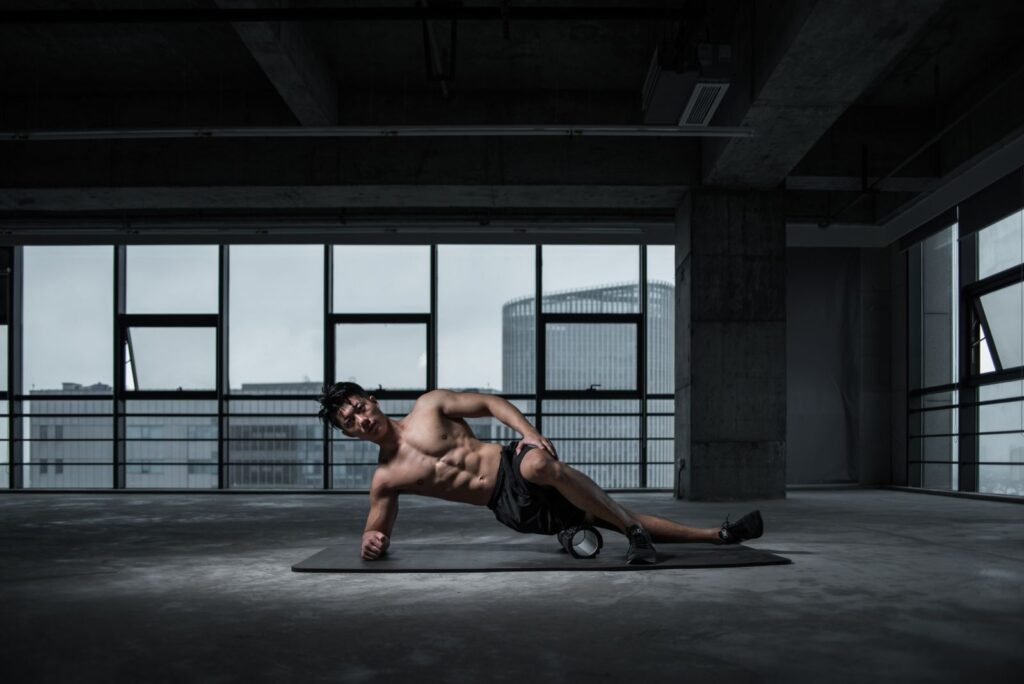
A foam roller uses your own body weight to apply sustained pressure across a muscle as you roll back and forth. This is self-myofascial release, basically a DIY version of what a sports massage therapist does with their forearm. It’s slow, it’s a bit uncomfortable on tight spots, and it works large muscle groups efficiently.
Rollers come in different densities and textures. A smooth, softer roller like the Gaiam Restore Foam Roller is gentler and better for beginners or anyone with low pain tolerance. A firmer, textured option like the RumbleRoller Deep Tissue Massage Roller digs deeper and feels more like a deep tissue massage, which some fighters prefer after hard sparring sessions.
The biggest advantage of foam rolling is that it doubles as a warm-up tool. Rolling your quads, hip flexors, and lats before training can improve range of motion in the short term, which matters for kicks, takedowns, and shoulder mobility. A massage gun can do some of this too, but a roller is usually the more natural fit for a pre-training routine.
How a massage gun actually works
A massage gun delivers rapid, repetitive percussion into a muscle, typically 2,000 to 3,200 percussions per minute depending on the model. That rapid pulsing increases local blood flow and can help reduce the perception of muscle tightness and soreness faster than static pressure from a roller.
The appeal is speed and precision. You can hit a tight calf, a knotted trap, or a sore glute in 30 to 60 seconds without needing to get on the floor or contort your body. For fighters dealing with a specific problem area, like a tight piriformis from wrestling or a jammed-up forearm from heavy bag work, that precision is genuinely useful.
Entry-level options like the Renpho Active Massage Gun or Renpho Thermacool Massage Gun cover the basics well. Mid-range picks like the Theragun Prime and Ekrin B37 offer stronger motors and better battery life, while higher-end models like the Theragun Elite, Hypervolt 2 Pro, and Theragun Pro Plus add more attachments, adjustable arms, and quieter brushless motors. If you want a compact option for a gym bag, the Theragun Mini is a common choice. We’ve also got a step-by-step guide on how to use a massage gun after training if you’re new to one.
Price and value over time
A solid foam roller like the TriggerPoint GRID Foam Roller or the budget-friendly Amazon Basics Textured Muscle Foam Roller is a one-time purchase that lasts years with basic care. There are no batteries to charge and nothing to break beyond the foam eventually losing some firmness.
Massage guns cost more upfront and have moving parts, batteries, and motors that can wear out. That said, the batteries on most modern guns last long enough for several weeks of regular use between charges. If budget is tight, a foam roller gives you more recovery value per dollar. If you’ve got the money and want the convenience, a massage gun is worth the investment.
Effectiveness: what the research actually says
Studies on both tools show similar themes: short-term reductions in perceived muscle soreness and small, temporary improvements in range of motion. Neither tool has strong evidence for dramatically speeding up muscle repair or preventing injury on its own. Think of both as tools that help you feel and move better between sessions, not magic recovery shortcuts.
The National Strength and Conditioning Association and similar sports science organizations generally frame foam rolling and percussion therapy as complementary to, not replacements for, proper warm-ups, sleep, hydration, and progressive training load. If you’re dealing with persistent pain or a suspected injury, see a qualified coach or medical professional rather than relying on self-massage tools.
Portability and travel
If you compete or travel to seminars, a massage gun is far easier to pack. The Theragun Mini fits in a gear bag without taking up much space, and most models come with a hard case. A full-size foam roller is bulky and awkward in a suitcase, though a smaller option like the TriggerPoint GRID Mini Foam Roller solves that problem if you want rolling on the go.
For fighters packing for a seminar or competition, our guide to packing a gym bag for MMA class covers what else is worth bringing along.
Combining the two in a real recovery routine
You don’t have to choose one forever. A common approach among fighters is to foam roll the big muscle groups, quads, lats, hamstrings, calves, as part of a warm-up or cool-down, then use a massage gun for a few minutes on specific tight spots before bed or the morning after a hard session. Some athletes also pair either tool with other recovery habits like ice baths; check our guide to ice bath tubs for recovery if cold exposure is part of your routine.
A hybrid option worth mentioning is the Hyperice Vyper 2.0 Vibrating Roller, which combines vibration with the rolling motion of a traditional foam roller. It’s a middle ground for someone who wants a bit more than static pressure without buying a separate massage gun.
Which should you choose?
Choose a foam roller if: you’re on a budget, you want a tool that also helps with pre-training mobility, or you train large muscle groups hard (legs after Muay Thai or wrestling, back and lats after BJJ). A good starting point is the TriggerPoint GRID Foam Roller, or the softer Gaiam Restore Foam Roller if you’re sensitive to pressure.
Choose a massage gun if: you deal with specific tight spots, you want faster relief after a quick training window, or you travel a lot for training and competition. The Theragun Prime is a solid mid-range pick, while the Renpho Active Massage Gun is a good entry point if you’re just trying it out.
Choose both if: you train 4+ times a week across disciplines and recovery is a real priority. Pair a roller for warm-ups and general maintenance with a gun for spot-treating knots. If you want a deeper dive into either category, our foam roller buying guide and massage gun buying guide cover more options at every price point.
Whichever you pick, recovery tools work best alongside smart training. If you’re building out a full home setup, our guide on building a home boxing gym on a budget covers the essentials beyond recovery gear too.
Frequently asked questions
Is a massage gun better than a foam roller?
Not necessarily better, just different. A massage gun is faster and more targeted for specific sore spots, while a foam roller covers larger muscle groups and doubles as a warm-up tool. Many fighters use both depending on the situation.
Can I use a foam roller and massage gun on the same day?
Yes, there’s no issue combining them. A common routine is foam rolling before training for mobility, then using a massage gun after training or before bed on specific tight areas.
Do massage guns actually help with muscle soreness?
Many users report feeling looser and less sore shortly after use, and it can temporarily improve blood flow to the area. The effect is generally short-term and works best alongside good sleep, hydration, and sensible training load rather than as a standalone fix.
How long should I use a massage gun on one spot?
Most guidance suggests 30 to 60 seconds per muscle group, moving the gun slowly rather than holding it in one exact spot. Avoid using it directly on joints, bones, or acute injuries, and stop if you feel sharp pain.
What foam roller density is best for beginners?
Softer, smooth rollers like the Gaiam Restore are more comfortable for beginners since they apply gentler pressure. Firmer, textured rollers can feel intense at first and are usually better once you’re used to the sensation.
Should I see a doctor instead of using these tools for pain?
If you have sharp, persistent, or worsening pain, swelling, or reduced range of motion that doesn’t improve with rest, see a qualified coach or medical professional rather than relying on self-massage tools. Foam rollers and massage guns are for general muscle maintenance, not injury treatment.