How to Train MMA at Home Without a Gym
A practical step-by-step plan for building striking, grappling, and conditioning skills at home with minimal equipment.
In this guide
The Fighters Shop is reader-supported. As an Amazon Associate we earn from qualifying purchases, at no extra cost to you. Learn more
MMA is built on timing, pressure, and reaction to a resisting opponent, which is hard to fully replicate alone. That said, a huge amount of the work that makes fighters good — technique repetition, conditioning, mobility, and bag power — can be done solo in a garage or spare room. Training this way correctly means being honest about what you’re building (skill and fitness) versus what you’re not (live combat reflexes), and structuring sessions so you don’t just burn calories without improving.
Done right, home training is a legitimate way to stay sharp between gym sessions or to build a base before you ever step on a mat. Done wrong, it turns into aimless bag-bashing with no carryover to actual fighting. This guide walks through a realistic setup and weekly structure, with honest notes on where home training has limits.
Step-by-step
Set up a dedicated training space
You don’t need a full gym — a 10×10 ft area with decent headroom and non-slip flooring is enough for bag work and shadow grappling. If you’re mounting a heavy bag, use a proper heavy bag mount rated for the bag’s weight, anchored into a stud or joist. A rubber gym mat or cheap wrestling mat protects your floor and your joints when you’re doing ground work.
Pick your striking equipment
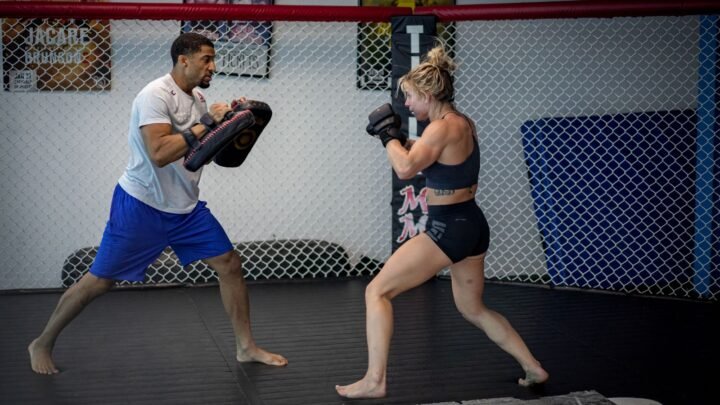
A wall-mounted or free-standing heavy bag covers boxing, kicks, knees, and elbows. If you’re in an apartment or can’t drill into a wall, a free-standing punching bag is the easier option since it just needs floor space and water or sand in the base. Pair it with bag gloves and hand wraps so you’re not loading your wrists and knuckles raw.
Warm up with movement, not just stretching
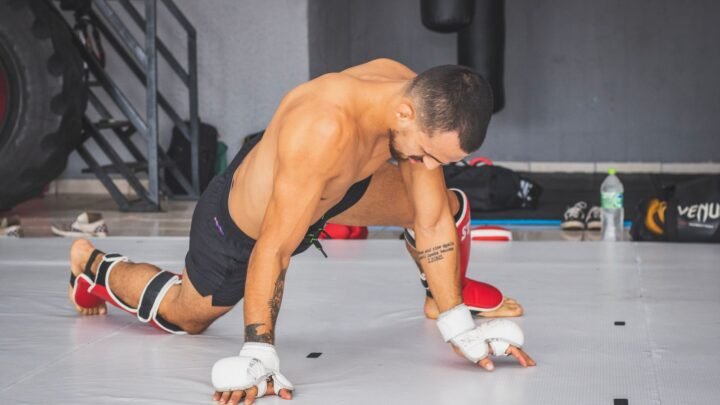
Spend 8-10 minutes on dynamic movement before anything else: hip circles, lunges, shoulder rolls, and a few minutes of easy shadowboxing or shrimping on the mat. This wakes up the joints you’re about to load and lowers injury risk far more than static stretching alone, according to general guidance from sports medicine bodies like the National Athletic Trainers’ Association.
Drill striking combinations on the bag
Work in 3-minute rounds with 1-minute rest, just like a real fight clock. Start each round with footwork and jab-based combos, then layer in kicks, knees, and clinch elbows as the rounds progress. Film yourself occasionally on your phone — it’s the fastest way to catch sloppy guard drops or wide hooks without a coach standing next to you.
Train grappling positions solo
Without a partner, focus on solo drilling: shrimping, technical stand-ups, sprawls, hip escapes, and shadow wrestling for takedown entries. A grappling dummy lets you practice guard passes, submissions, and ground-and-pound positioning with actual resistance and weight to move. This builds the muscle memory so technique comes faster once you do get a live partner.
Build MMA-specific conditioning
MMA fitness isn’t steady-state cardio — it’s repeated short bursts of high output with incomplete recovery. Use circuits mixing kettlebell swings, burpees, battle rope work if you have it, and bodyweight explosive movements in 3-5 minute rounds matching your fight-length intervals. A kettlebell and a set of resistance bands cover most of what you need for strength work in a small space.
Add shadow MMA rounds
Shadow rounds that mix striking, level changes, sprawls, and ground transitions train your brain to link phases of a fight, not just isolated skills. Picture an opponent reacting to you — throw a combo, imagine a takedown attempt, sprawl, scramble to a dominant position. This is one of the most underrated solo drills because it forces decision-making, not just repetition.
Protect yourself with the right gear
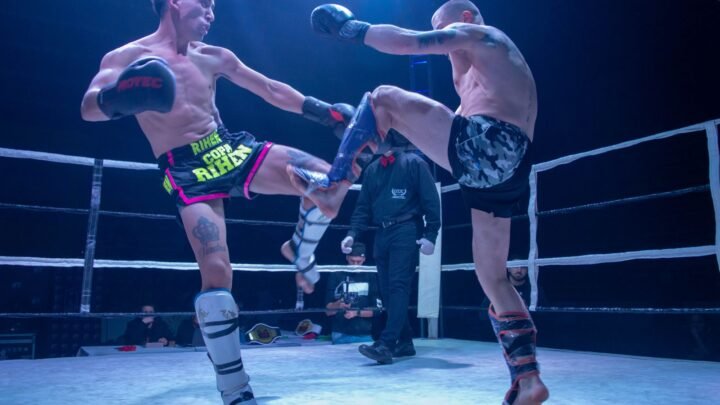
Shin guards matter even in solo training if you’re kicking a heavy bag regularly — repeated hard contact without conditioning your shins first is a common way beginners get hairline bruising or stress reactions. Condition your shins gradually and wear shin guards during drilling rounds rather than going bare from day one.
Schedule recovery like a real training block
Home training has no built-in rest days unless you plan them — nobody’s telling you to tap out and ice down. Build in at least one full rest day per week and use basic recovery tools like a foam roller or the lower-cost end of a foam roller vs massage gun comparison to manage soreness from bag work and conditioning.
Find a way to pressure-test your skills
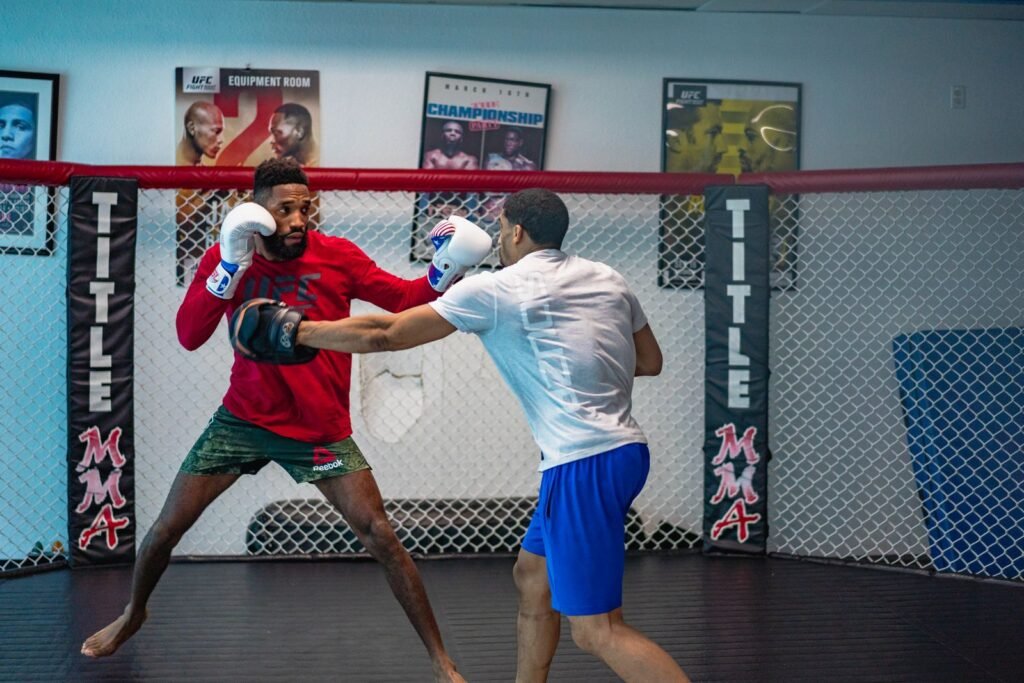
This is the step people skip, and it’s the most important one. Technique without live resistance doesn’t transfer to real fighting — you need a partner, even an occasional one, to check takedowns, work live rounds, and spar under supervision. If a full gym isn’t accessible, look for open mats, a training partner willing to trade light rounds, or periodic sessions with a local MMA coach to correct your technique in person.
Common mistakes to avoid
The biggest mistake is treating home training as a full replacement for gym training rather than a supplement to it. Solo drilling builds technique and conditioning, but it can’t replicate the chaos of a resisting opponent, and skipping live sparring entirely leaves real gaps in timing and distance management.
Another common error is skipping warm-ups and going straight into hard bag rounds — shins, wrists, and shoulders take the brunt of this and it shows up as nagging overuse injuries over time. Training the same two or three combos on repeat without variation is also a trap; it feels productive but builds predictable, one-dimensional striking.
Finally, a lot of home trainers under-invest in protective gear because “it’s just me hitting a bag.” Bare-knuckle bag work and unconditioned shin-kicking both lead to avoidable injuries that sideline training for weeks. Proper wraps, gloves, and shin guards aren’t optional just because there’s no sparring partner in the room.
Tips from the gym
Coaches generally recommend treating each home session like a mini fight camp — warm-up, skill work, live-feel drilling, conditioning, cool-down — rather than randomly hitting the bag until you’re tired. Structure beats volume almost every time for skill retention.
Filming your rounds is one of the most useful habits you can build without a coach present. Watching your own footage back exposes habits — dropped hands, square stance, telegraphed kicks — that are invisible while you’re mid-round.
If you can get even one training partner once a week, prioritize live positional sparring over cardio circuits in that session. Solo work can replicate conditioning reasonably well; it can’t replicate a person trying to take your head off or sweep you, so use partner time for exactly that.
Recommended gear
For striking, a reliable bag setup matters more than anything else in a home MMA space. If wall-mounting, pair your bag with a solid heavy bag mount; if that’s not possible, go free-standing with the RDX Freestanding Punching Bag.
Fairtex FGV18 MMA Gloves are a solid middle ground between bag gloves and sparring gloves if you plan to eventually drill with a partner. Check our Top 10 Best MMA Gloves guide for more options by hand size and use case.
For ground work, the Combat Sports Grappling Dummy is a solid investment if you’re serious about solo takedown and submission drilling — see our Top 10 Best Grappling Dummies guide for sizing advice.
Round out your kit with shin guards for bag kicking — the Top 10 Best MMA Shin Instep Guards guide breaks down padding types for home use versus sparring. And if you’re building your whole setup from scratch, our Starting MMA gear guide covers exactly what to buy first and what to skip.
Frequently asked questions
Can you actually learn MMA without a gym?
You can build real striking technique, conditioning, and grappling fundamentals at home, but live sparring and partner drilling are hard to replace. Most people get the best results combining home training with occasional gym sessions, open mats, or lessons from a qualified coach.
What equipment do I really need to start?
At minimum, a heavy bag or free-standing bag, gloves, hand wraps, and some floor space for mobility and ground drills. A grappling dummy and shin guards are worth adding once you’re training consistently, especially if kicking is part of your routine.
How many days a week should I train MMA at home?
Four to five sessions a week works well for most people, mixing striking days, grappling drilling days, and conditioning, with at least one full rest day. Overtraining without recovery is a common reason home trainers plateau or get hurt.
Is it safe to kick a heavy bag without a coach watching?
It’s generally fine once you’ve learned basic kicking mechanics and are conditioning your shins gradually, but bad habits can set in unnoticed without feedback. Filming yourself and periodically checking in with a coach, even virtually, helps catch issues early.
How do I practice takedowns and grappling without a partner?
Solo drilling on a grappling dummy, shadow wrestling for shot entries, and movement drills like sprawls and hip escapes all build useful muscle memory. These won’t replace live resistance, so look for open mats or a willing partner when you can.
What's the biggest difference between home training and gym training?
The biggest gap is live, resisting opponents — sparring, rolling, and clinch work against someone actively trying to counter you. Home training builds the technical and physical base; the gym (or a willing partner) is where that base gets tested under pressure.