BJJ for Beginners: The Complete Starter Guide
A friendly, no-nonsense guide to starting Brazilian Jiu-Jitsu, from your first class to the gear that actually matters.
In this guide
The Fighters Shop is reader-supported. As an Amazon Associate we earn from qualifying purchases, at no extra cost to you. Learn more
Brazilian Jiu-Jitsu has a reputation for being intimidating, and honestly, that first class can feel that way. But it’s also one of the most welcoming martial arts communities out there once you push through the awkward first few weeks. This guide walks you through what BJJ actually is, what your first classes will look like, the basics you’ll drill over and over, and the gear worth owning.
What is BJJ, exactly?
Brazilian Jiu-Jitsu is a grappling martial art built around controlling an opponent on the ground and using leverage, technique, and positioning to force a submission (a choke or joint lock) rather than relying on strength or size. It grew out of Japanese Judo and was refined in Brazil, most famously by the Gracie family, into the ground-fighting system practiced worldwide today.
Unlike striking arts, there’s very little getting hit in BJJ. Instead, you’re solving physical puzzles against a live, resisting opponent. That’s part of why it’s addictive: there’s always a small adjustment, a better grip, or a new escape to learn.
What to expect from your first class
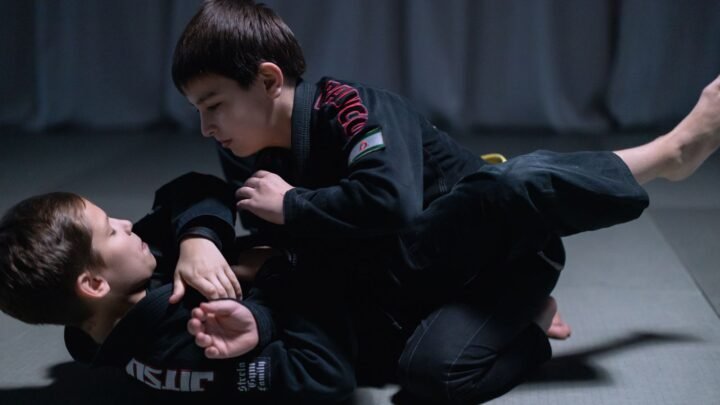
Most academies structure a beginner class in three parts: a warm-up, technique instruction where the coach breaks down a move step by step, and then drilling that move with a partner. Many gyms also run a short live rolling (sparring) session at the end, though good beginner-friendly gyms often ease new students into that gradually.
You’ll tap a lot in your first few months. That’s normal and not a reflection of your athleticism. Everyone in that room, including the black belts, went through the exact same phase of getting caught in submissions they didn’t see coming.
Expect to feel awkward, sore in places you didn’t know could get sore, and mentally fried after class. That’s your brain building new movement patterns. It gets easier, and most people notice real progress by the three-to-six month mark if they train consistently.
The basics every beginner should know
You don’t need to memorize a syllabus, but a few concepts will come up in almost every class:
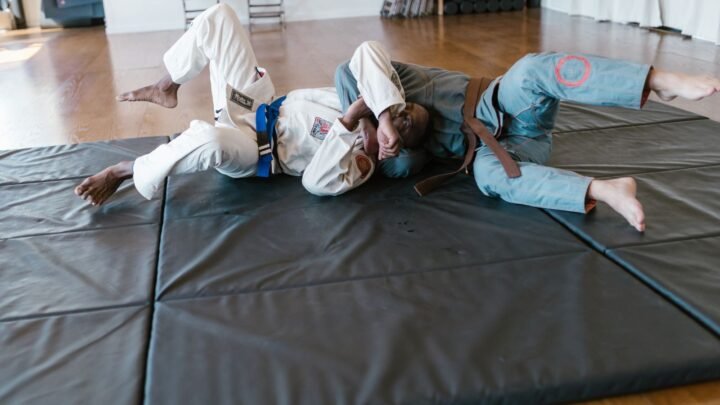
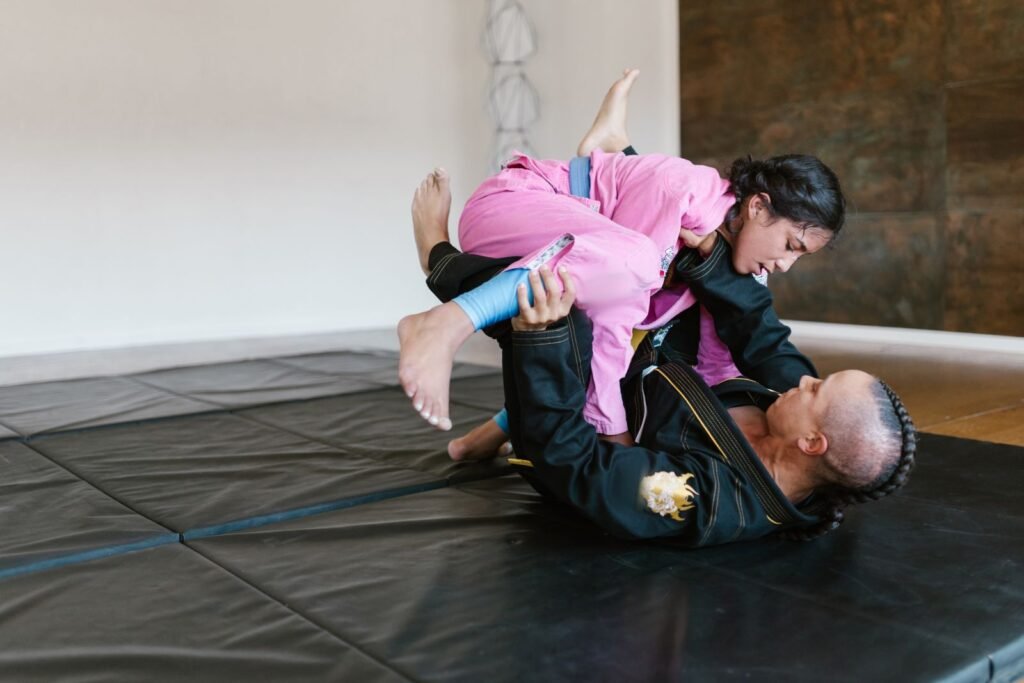
- Guard: Being on your back with your legs wrapping or framing against your opponent. Contrary to how it sounds, this is often a strong defensive and offensive position in BJJ.
- Mount and back control: Dominant positions where you’re on top of, or behind, your opponent’s back with hooks in. These are positions you’re trying to get to.
- Passing the guard: Getting around your opponent’s legs to advance to a more dominant position.
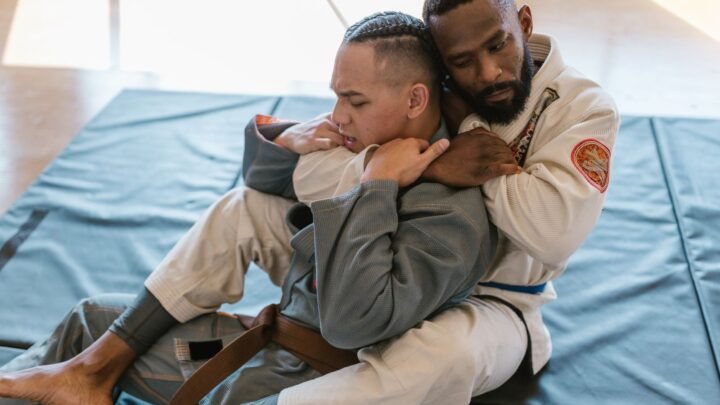
- Submissions: Chokes (like the rear naked choke or cross collar choke) and joint locks (like the armbar) that force your opponent to tap.
- Escapes: Getting out of bad positions like being pinned under mount or side control. Beginners should spend as much time learning escapes as attacks.
A good habit early on: ask your coach after class if you’re unsure why something worked or didn’t. Most instructors are happy to give a beginner five extra minutes of clarity.
Training tips that actually help beginners
Go slow and focus on technique over strength. Trying to muscle your way out of bad positions burns you out fast and teaches your body the wrong habits. BJJ rewards patience far more than it rewards power.
Tap early, tap often. There’s no prize for holding a submission an extra second to prove a point. Tapping quickly and resetting is how you stay healthy enough to keep training for years, which is the actual goal.
Show up twice a week if you can manage it. Consistency beats intensity when you’re new. Two focused sessions a week for six months will teach you more than one intense session followed by three weeks off.
Roll with people above and below your level. Rolling with more experienced partners teaches you what good technique feels like. Rolling with other beginners builds your confidence and lets you actually try things.
If you’re deciding between training in a gi or without one, our guide on gi vs no-gi BJJ breaks down the gear, cost, and pace differences so you can pick a starting point that fits your goals.
Safety and injury prevention
BJJ is generally low-impact compared to striking sports, but joint locks, neck cranks, and the sheer volume of live grappling mean injuries do happen, especially to fingers, knees, and necks. Training with a qualified, attentive coach and rolling at a controlled pace matters far more than any piece of gear.
Always warm up properly before rolling, and speak up immediately if something feels wrong in a joint lock rather than waiting to see if it gets worse. Learn to tap on principle, not just on pain, since some chokes and locks can go from fine to injury quickly.
Hygiene is a real safety issue in grappling. Ringworm, staph, and other skin infections spread through mat contact and shared gear, so shower right after training, wash your gi and rash guard after every session, and never train with an open cut or active skin infection. Keep your fingernails and toenails trimmed short to avoid scratching training partners or yourself.
For general guidance on safe training practices and recovering from soft-tissue injuries, resources from organizations like the National Athletic Trainers’ Association are a solid reference point, though nothing replaces an in-person evaluation from a doctor or physical therapist for anything beyond normal soreness.
How gis and belts work
BJJ has a belt ranking system: white, blue, purple, brown, and black, with stripes marking progress within each belt. As a beginner, you’ll start at white belt, and progression is based on time, skill, and your instructor’s judgment rather than fixed testing dates like some striking arts use.
If your gym trains in the gi, you’ll want one that fits properly since a baggy or oversized gi is harder to grip and control, and one that’s too tight restricts movement. Our BJJ gi size guide walks through sizing by height and weight so you’re not guessing. Once you own one, learning how to wash a BJJ gi without shrinking it will save you from ruining it in the first month.
Starter gear checklist
- A properly fitted gi if your academy trains gi classes: Fuji Sports BJJ Gi. See our gi sizing guide before you buy.
- A rash guard to wear under your gi or for no-gi classes, which helps with grip control and hygiene: Hayabusa rash guard.
- No-gi grappling shorts if your gym offers no-gi sessions: Venum no-gi grappling shorts.
- A mouthguard, since accidental head bumps happen during scrambles: SISU mouthguard.
- Flip-flops or slides for walking to and from the mats, since bare feet on locker room floors is how skin infections spread: Adidas slides.
- A gym bag big enough to separate clean and used gear: Hayabusa gear bag.
- Ear guards if you notice early signs of cauliflower ear from repeated friction: Cliff Keen ear guards.
- A gentle antibacterial body wash for post-training hygiene: Defense Soap body wash.
If you’re also curious about other combat sports, our Judo & Wrestling hub covers a lot of crossover skills like takedowns and grip fighting, and the MMA hub is useful once you start thinking about combining grappling with striking. For general home training tools to build strength and mobility between classes, check the Home Training hub.
Frequently asked questions
How long does it take to get good at BJJ?
Most people notice real improvement in defense and basic escapes within three to six months of consistent training. Getting to blue belt typically takes one to two years of regular attendance, though this varies a lot by gym and individual pace.
Do I need to be in shape before starting BJJ?
No, BJJ will build your fitness as you go. Just expect to be more tired than usual in your first few weeks as your body adapts to the specific demands of grappling.
Is BJJ safe for beginners?
It’s generally low-impact compared to striking sports, but injuries can happen from joint locks and the physical intensity of rolling. Training under a qualified coach, tapping early, and progressing at a sensible pace makes it a reasonably safe long-term training option for most healthy adults.
What should I wear to my first BJJ class?
A t-shirt and athletic shorts or leggings without pockets or zippers work fine for your first class. Most gyms will loan a gi if needed or won’t require one until you decide to continue training.
How often should beginners train BJJ?
Two to three classes a week is a solid, sustainable starting point that builds skill without overwhelming your body. One session a week will still teach you things, just more slowly.
Do I need a gi to start BJJ?
Not necessarily. Many gyms offer no-gi classes, and you can train in a rash guard and grappling shorts instead. Our guide on gi vs no-gi BJJ can help you decide which fits your goals and budget better as you start out.