How to Wrap Your Hands for Kickboxing (Step-by-Step)
A step-by-step guide to wrapping your hands properly for kickboxing, covering wrist support, knuckle protection, and common mistakes to avoid.
In this guide
The Fighters Shop is reader-supported. As an Amazon Associate we earn from qualifying purchases, at no extra cost to you. Learn more
Hand wraps are the single cheapest piece of insurance you own in kickboxing. They stabilize the many small bones in your wrist and hand, keep your knuckles aligned inside the glove, and give you a layer of protection against the repeated impact of pads, bags, and sparring partners. A sloppy wrap job is one of the most common reasons beginners end up with sore wrists or bruised knuckles after just a few weeks of training.
The good news is that wrapping your hands well is a skill you can learn in a week of practice. It’s mostly muscle memory once you understand the pattern. Below is a reliable, coach-approved method that works for heavy bag work, pad rounds, and sparring alike.
Step-by-step
Start with the loop over your thumb
Slide the small loop at the end of the wrap over your thumb, then bring the material across the back of your hand toward your wrist. This anchors the wrap so it doesn’t slide around while you work. Keep the fabric flat against your skin, not twisted, from the very first pass.
Wrap the wrist two to three times
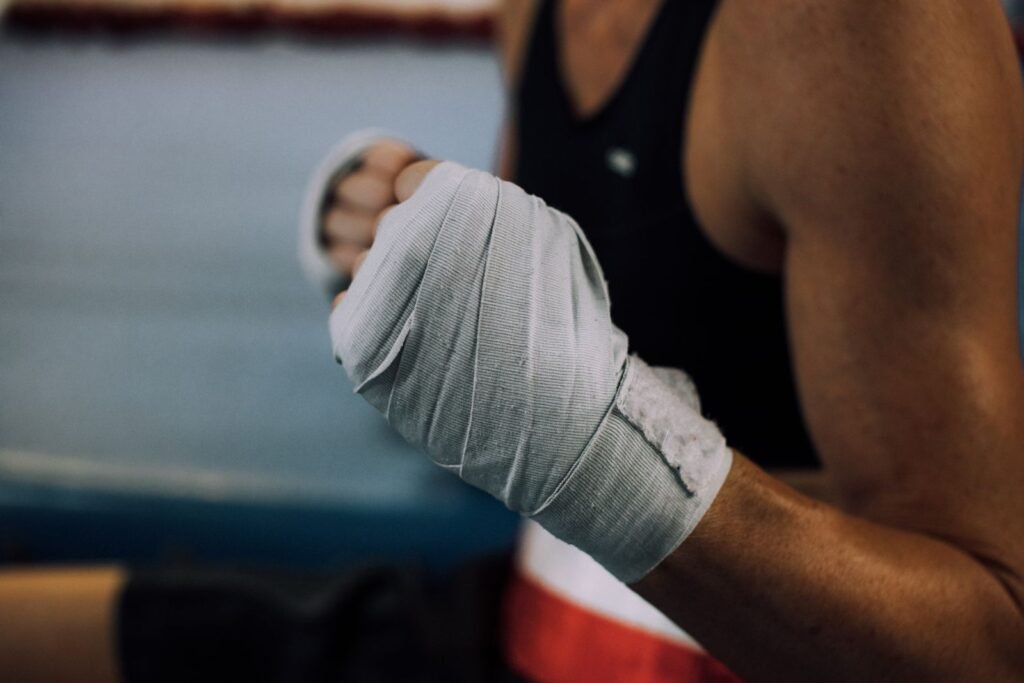
Circle the wrap around your wrist two to three times, pulling it snug enough to feel supportive but not so tight it restricts blood flow. This is the part of the wrap that stabilizes the wrist joint during punches, so don’t rush it. You should be able to make a fist comfortably without the wrap cutting into your skin.
Cross over the back of the hand
Bring the wrap diagonally across the back of your hand, heading toward your pinky-side knuckles. This diagonal pass is what locks the wrist wrap in place and starts building the foundation for knuckle coverage. Keep even tension the whole way across.
Wrap around the knuckles three or four times
Circle the wrap around your main knuckles (the ones that make contact when you punch) three to four times. This is the padding that protects your hand when you hit pads, bags, or an opponent’s gloves. Make sure the knuckles are covered edge to edge, not just in the center.
Weave between each finger
Bring the wrap back across the hand and thread it between your fingers, starting at the pinky and working toward the thumb (or vice versa, depending on your wrap length). This isolates each finger slightly and adds extra stability, which matters a lot once gloves go on and your hand is enclosed. Don’t pull too tight here, your fingers need to move freely.
Reinforce the knuckles again
After weaving through the fingers, bring the wrap back over the knuckles for one or two more passes. This doubles up your padding right where you need it most. If you have wrap left over at this stage, this is the place to use it.
Secure and lock the thumb
Run the wrap around the thumb once more for extra stability, especially important if you’ve had thumb injuries before. The thumb takes unexpected stress during clinch work and when gloves shift slightly during sparring.
Finish back at the wrist
Bring any remaining wrap back to the wrist and circle it a final time or two before securing the velcro closure. Check that the wrist still feels snug, not loose, since this is the area that takes the brunt of the load with every punch.
Test your range of motion
Open and close your fist fully, spread your fingers, and rotate your wrist before putting your gloves on. You should have full mobility with firm support, not stiffness or numbness. If anything feels wrong, unwrap and start over, it only takes a minute.
Common mistakes to avoid
Wrapping too loosely is the most common error, especially with beginners who are worried about cutting off circulation. A loose wrap does almost nothing to protect your wrist or knuckles once you start hitting pads or bags with any real pace. Aim for snug and supportive, not floppy.
The opposite problem, wrapping too tightly, is just as bad. If your fingers tingle, turn pale, or feel numb after wrapping, take it off immediately and redo it. Numbness during training is a sign that circulation is restricted, and that’s not something to push through.
Skipping the finger weave is another shortcut people take to save time. Without it, your hand has less internal stability inside the glove, and your fingers can shift during impact, which increases the risk of jams or sprains. It only adds about ten seconds to the process, so there’s no good reason to skip it.
Finally, wearing the same wraps for months without washing them is a hygiene problem waiting to happen. Sweat-soaked wraps breed bacteria fast. If your wraps are reusable (not single-use), you need to actually clean them regularly, not just air them out.
Tips from the gym
Buy wraps that are 180 inches long if you have average to larger hands, or 120 inches if you have smaller hands or are wrapping kids for class. Longer wraps give you enough material to fully cover knuckles and weave fingers without running short halfway through.
Semi-elastic cotton wraps are the standard choice for kickboxing because they offer a good balance of support and breathability. Gel-infused wraps add a layer of built-in knuckle padding, which some fighters like for extra bag work protection, though they’re not a replacement for proper wrapping technique.
Practice wrapping both hands evenly before you ever step into a kickboxing class. Many gyms expect you to show up with your hands already wrapped, and fumbling with wraps in front of a group is a confidence killer you can easily avoid with a few at-home run-throughs.
If you train frequently, own two or three sets of wraps so you always have a dry pair ready. Wet wraps don’t just smell bad, they also lose some of their supportive structure and take longer to dry between sessions. For more on keeping all your kit fresh, see our guide on how to stop your fight gear from smelling.
According to resources from organizations like the American Academy of Orthopaedic Surgeons, proper support of the wrist joint during repetitive impact activity reduces strain-related injury risk over time, which is exactly what a good wrap is designed to do. Always train under a qualified coach who can check your wrapping technique and striking form in person.
Recommended gear
For most kickboxing training, semi-elastic cotton wraps in the 180-inch length cover the widest range of hand sizes and uses. The Sanabul Elastic Professional Hand Wraps are a popular, durable option that holds tension well through repeated sessions. Check the current price on Amazon:
Sanabul Elastic Professional Hand WrapsIf you want extra knuckle cushioning built right into the wrap, the Sanabul Elite Gel Hand Wraps add a padded layer that some fighters prefer for heavy bag rounds.
Sanabul Elite Gel Hand WrapsRDX Hand Wraps are another solid, widely-used option with reinforced velcro closures that hold up well over time.
RDX Hand WrapsOnce your hands are wrapped properly, you’ll want gloves that fit well over them. The Sanabul Essential Gel Boxing Kickboxing Gloves are a dependable, affordable choice for bag work and pad rounds.
For a deeper comparison of every major wrap style and length, check out our full Top 10 Best Hand Wraps for Muay Thai guide, and if you’re also sorting out glove choice, our Top 10 Best Kickboxing Gloves guide breaks down sizing and padding differences. Browse more training essentials on our Kickboxing hub.
Frequently asked questions
How long should hand wraps be for kickboxing?
Most adults do best with 180-inch wraps, which give enough length for full wrist support, knuckle coverage, and a finger weave. Smaller hands or younger athletes often prefer 120-inch wraps. If you’re unsure, 180 inches is the safer default since you can always leave excess loose if needed.
How tight should hand wraps be?
Your wraps should feel snug and supportive, similar to a firm handshake, not tight enough to cause tingling or numbness. You should be able to make a full fist and wiggle your fingers freely. If your hand changes color or feels cold after wrapping, take it off and redo it looser.
Can I use hand wraps without gloves?
Hand wraps alone don’t provide enough cushioning for hitting bags, pads, or sparring partners at any real power. They’re designed to work together with gloves, with the wrap supporting the wrist and bones while the glove absorbs impact. Skip the gloves only for very light shadow boxing or technique drilling.
Do I need different wraps for kickboxing versus boxing?
The wrapping technique is essentially the same for both sports since the goal is wrist stability and knuckle protection. Some kickboxing and Muay Thai gyms lean toward slightly longer wraps for added coverage during kicking-based clinch exchanges, but any quality semi-elastic wrap works for both disciplines.
How often should I wash my hand wraps?
Wash reusable cotton or elastic wraps after every two to three sessions, or more often if you train in hot, humid conditions. Sweat buildup breeds bacteria and odor quickly, and it also breaks down the elastic fibers over time. Air-drying them fully between washes also helps extend their lifespan.
What's the difference between Mexican-style and traditional hand wraps?
Mexican-style wraps use a more elastic weave that stretches to fit snugly without needing as much manual tension adjustment, which many fighters find faster to put on. Traditional semi-elastic wraps offer more control over exactly how tight each section is, which some coaches prefer for teaching proper technique. Both styles work well once you’re comfortable with the wrapping pattern.