Choosing the Right Protective Gear for Your First Sparring Class
A beginner's guide to the mouthguard, gloves, headgear, and shin guards you actually need before stepping into sparring for the first time.
In this guide
The Fighters Shop is reader-supported. As an Amazon Associate we earn from qualifying purchases, at no extra cost to you. Learn more
Your first sparring class is a big step, and it’s normal to feel a little nervous about it. The good news is that showing up with the right protective gear does a lot to settle those nerves. It protects you, protects your partner, and lets you focus on technique instead of worrying about getting hurt.
This guide walks through what gear you actually need, how it should fit, and what you can hold off on buying until you know which discipline you want to stick with. Always confirm requirements with your coach before class, since gyms and sports have different rules.
What to expect from a beginner sparring session
Beginner sparring is almost never full-contact chaos. Most coaches run it as controlled, technical sparring: light contact, slower pace, and a focus on positioning, timing, and defense rather than knockouts or submissions. You’ll likely be paired with a more experienced partner or another beginner, under direct supervision.
Expect your coach to set clear rules before you start, like “jabs and footwork only” or “no submissions above 50% intensity.” These rules exist so everyone can drill safely. If something feels too fast or too hard, it’s completely acceptable to tell your partner or coach to slow down.
Why your own gear matters, even as a beginner
Many gyms keep loaner gloves, headgear, and shin guards on hand, but shared gear has downsides. Sizing is rarely ideal, and shared padding soaks up sweat from dozens of students, which is a real factor in skin infections like ringworm and staph. Owning your own basic kit solves both problems and tends to pay for itself within a few months of regular training.
You don’t need to buy everything at once. Start with the items your gym requires for sparring, then build out from there as you figure out which martial art clicks with you. Our Protection Gear hub is a good place to browse once you’re ready to expand your kit.
The core pieces of protective gear, explained
Mouthguard
A mouthguard protects your teeth and reduces the risk of a bitten tongue or cheek during contact. Boil-and-bite guards are the standard budget option and mold to your teeth at home with hot water. A well-fitted mouthguard should stay in place on its own without you clenching your jaw to hold it.
Hand wraps
Hand wraps support your wrist and the small bones in your hand, and they’re worn under gloves in boxing, Muay Thai, kickboxing, and MMA. They’re not optional padding, they’re structural support that reduces the risk of wrist sprains and knuckle injuries. Get comfortable wrapping your own hands before your first class so you’re not fumbling with it while everyone waits.
Gloves
The right glove depends on your sport. Boxing and kickboxing typically use padded boxing-style gloves for sparring, while MMA and some grappling-based classes use smaller, more open-fingered sparring gloves that still allow gripping. Ask your coach what glove weight and style they want before you buy, since using the wrong type can actually get you turned away from sparring.
Headgear
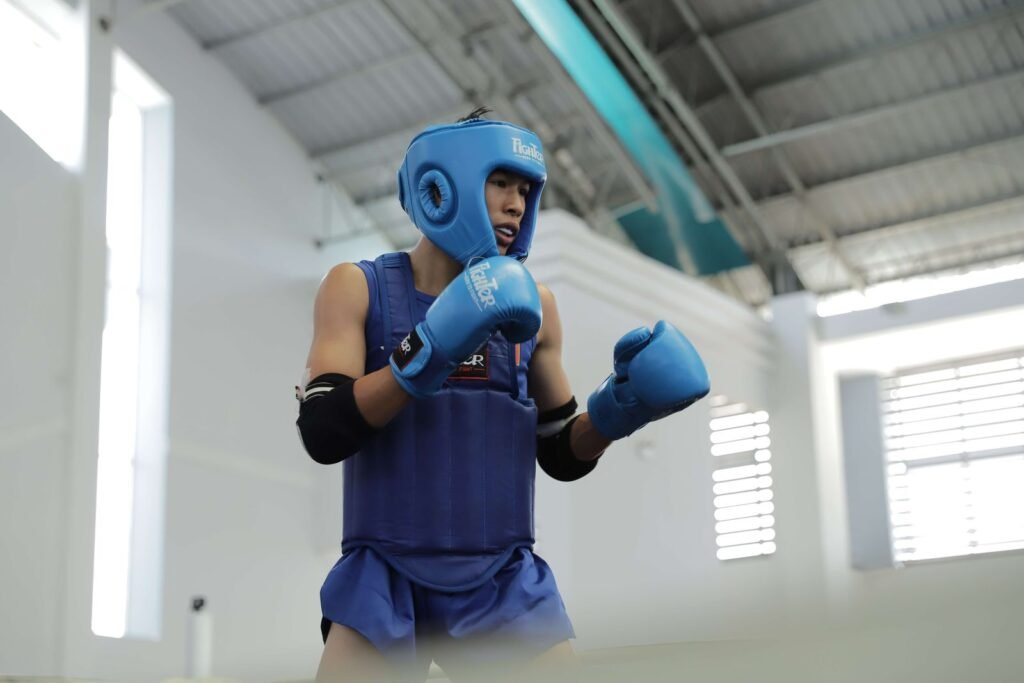
Headgear cushions strikes to the head and reduces cuts and abrasions, though it’s important to understand it doesn’t eliminate concussion risk. Many striking gyms require it for beginner sparring specifically because new students haven’t developed head movement and defensive instincts yet. Fit matters a lot here: headgear that shifts or blocks your vision is more dangerous than no headgear at all, because it distracts you and your partner.
Shin guards
If your sparring includes kicks, as in Muay Thai, kickboxing, or MMA, shin guards are essential for both you and your partner. They cushion the shin bone itself, which has very little natural padding and is prone to bruising and stress injuries with repeated contact. Beginners especially benefit from well-padded shin guards while they’re still learning to check kicks properly.
Groin guard
A groin guard (sometimes called a cup) is standard safety equipment in nearly every striking and MMA sparring setting, for all genders. It’s one of those pieces of gear you genuinely don’t want to skip, even in light technical sparring.
How protective gear should fit
Gear that’s too loose moves around during sparring and stops protecting the area it’s meant for. Gear that’s too tight restricts movement, cuts off circulation, or causes chafing that gets worse over multiple classes. As a general rule, you want snug but not restrictive: gear should stay put when you move but not leave deep marks on your skin after class.
Headgear should sit low enough to protect your temples and the back of your skull without sliding down over your eyes when you move. Gloves should let you close a full fist without the padding bunching up in your palm. Shin guards should cover from just below the knee to the top of the foot without gapping at the ankle.
Basic sparring safety tips for beginners
- Always ask your coach what contact level is expected before you start. “Light” and “medium” mean different things at different gyms.
- Agree on a tap-out or stop signal with your partner, and respect it immediately when it’s used.
- Check your gear for wear before every session. Cracked padding or torn straps need replacing, not duct tape.
- Stay hydrated and tell your coach immediately if you feel dizzy, nauseous, or unusually fatigued during a round.
- Never spar with an open cut or active skin infection, both for your health and your partner’s.
If you take a hit to the head during sparring and experience any symptoms like headache, confusion, or nausea, stop training and see a medical professional. Organizations like the CDC’s HEADS UP program have useful, plain-language guidance on recognizing concussion symptoms.
What to hold off on buying at first
You don’t need competition-grade gear, a full matching color-coded set, or multiple backup gloves for your first few months. Hold off on things like focus mitts, kick shields, or a heavy bag until you know you’re committed to training regularly. If you’re exploring multiple disciplines, our hub pages for Muay Thai, boxing, BJJ, and MMA are worth browsing to get a feel for what each sport’s gear culture looks like before you commit to buying more.
Starter gear checklist
- Mouthguard: a boil-and-bite option like SISU Aero is a solid low-profile choice for beginners. See our guide to the best mouthguards for martial arts for more options.
- Hand wraps for striking classes: pair with our step-by-step hand wrapping guide if you’re new to it.
- Sparring gloves for boxing or kickboxing: Sanabul Essential Gel Boxing Kickboxing Gloves are a common beginner pick. Check our best kickboxing gloves guide for alternatives.
- Sparring gloves for MMA-style classes: Ringside MMA Sparring Gloves work well for light contact drilling. Our guide to MMA gloves for sparring vs competition explains the differences.
- Headgear: Sanabul Essential MMA Headgear or Venum Challenger 2.0 Headgear are both beginner-friendly. See our full best MMA headgear guide for more.
- Shin guards for kicking sports: Sanabul Core Shin Guards are a reasonable entry point. Check our article on how to pick your first shin guards before buying.
- Groin guard: Fairtex Groin Guard is a widely trusted option across striking sports. Browse our best groin guards guide for sizing tips.
- Gear bag to keep it all organized: RDX Gym Bag Sports Holdall, paired with our guide to packing a gym bag for class.
If you want a deeper walkthrough of what to buy and what to skip when starting a specific sport, read our guide on starting MMA: gear you need and what to skip.
Frequently asked questions
Do I need my own gear for my first sparring class?
It’s not always required on day one, but it’s strongly recommended as soon as you plan to spar regularly. Shared gym gear fits less reliably and carries more hygiene risk than your own properly sized equipment. Ask your coach what’s mandatory before your first class.
What protective gear is required for beginner Muay Thai sparring?
Most Muay Thai gyms require hand wraps, Muay Thai gloves, shin guards, a mouthguard, and a groin guard for sparring. Headgear is often required for beginners specifically, even if more experienced students sometimes skip it. Check with your gym, since rules vary.
Is headgear necessary for sparring?
Many gyms require headgear for beginner sparring because it reduces cuts and cushions impact while you’re still learning head movement and defense. It does not eliminate concussion risk, so contact level and technique still matter most. Follow your coach’s rules on when headgear is required.
How tight should sparring gloves and headgear fit?
Both should feel snug but not restrictive. Gloves should let you make a full fist without the padding bunching awkwardly, and headgear should stay in place without sliding over your eyes or leaving deep red marks on your skin afterward.
Can I spar without a mouthguard?
Most gyms won’t allow it, and for good reason: a mouthguard protects your teeth and reduces the risk of a bitten tongue or cheek during contact. A boil-and-bite mouthguard is inexpensive and takes just a few minutes to fit at home.
What's the difference between training gloves and sparring gloves?
Training or bag gloves are usually built for hitting pads and heavy bags and may not offer enough wrist support or padding for partner contact. Sparring gloves are designed specifically for controlled contact with a training partner, with padding and fit suited to protecting both of you. Always ask your coach which type is approved for sparring at your gym.