Muay Thai for Beginners: Your First Month Explained
A practical, no-nonsense guide to your first month of Muay Thai training, from what class is really like to the gear worth buying early.
In this guide
The Fighters Shop is reader-supported. As an Amazon Associate we earn from qualifying purchases, at no extra cost to you. Learn more
Walking into your first Muay Thai class can feel intimidating. Pads snapping, shins slapping against bags, coaches barking corrections in Thai and English. Here’s the good news: nobody expects you to know anything on day one, and a decent gym will have you doing the same warm-up drills as everyone else within your first week.
This guide walks through what a typical first month looks like, the basics you’ll actually learn, how to train smart without wrecking your body, and the gear worth having before you go all-in on equipment. If you’re also weighing Muay Thai against other striking arts, our kickboxing hub and MMA hub have useful comparisons.
What is Muay Thai, actually?
Muay Thai is a striking art from Thailand often called “the art of eight limbs” because it uses fists, elbows, knees, and shins. It’s the base striking style for a lot of MMA fighters because it’s brutally effective at range and in the clinch. Unlike boxing, you’ll be trained to check kicks with your shins and throw knees from the clinch almost from day one.
It’s also a full sport with its own rules, judging criteria, and a long competitive history in Thailand and internationally. If you want to see the sport’s global governing structure, the International Federation of Muaythai Associations is a good reference point.
What your first class will actually look like
Most gyms run a similar template: a group warm-up (jump rope, jogging, dynamic stretching), technique drilling in pairs or on pads, then bag work or conditioning to close things out. As a beginner, you’ll usually be pulled aside or paired with a patient training partner so a coach can walk you through the fundamentals without holding up the whole class.
Don’t expect to hit pads with a coach on day one at every gym, but many will let you try holding pads for a partner even in your first week just to get a feel for rhythm and distance. Expect your shins to ache after kicking a heavy bag for the first time. That’s normal and it fades as your body adapts.
The basics you’ll drill first
Almost every gym starts beginners on the same handful of things:
- Stance and guard: weight balanced, hands up, chin tucked, back heel slightly raised.
- Jab and cross: the same punches you’d see in boxing, forming the base of your hands.
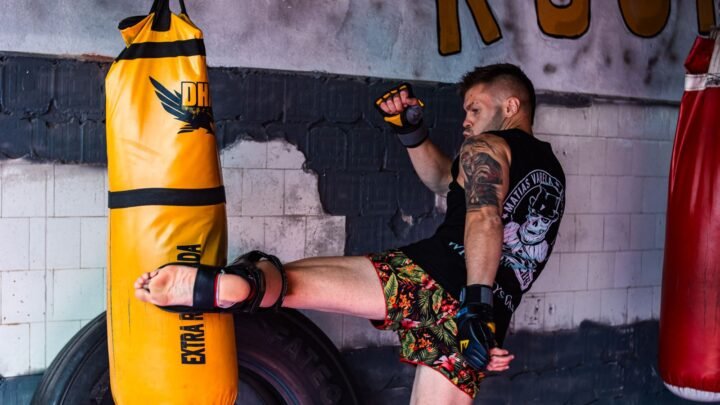
- Teep (push kick): a straight kick used to control distance, not just to hurt someone.
- Low kick and roundhouse: thrown with the shin, rotating the hip through the target.
- Knee strikes: straight and diagonal knees, often introduced once you’re comfortable in the clinch.
- Basic clinch work: controlling a partner’s head and arms at close range.
You won’t master any of these in a month, and that’s fine. The goal early on is repetition and getting comfortable moving your body in unfamiliar ways, not power or speed.
What actually improves in month one
Realistically, don’t expect huge technical leaps in four weeks. What does improve fast is conditioning: your gas tank, your comfort with the movements, and your shin toughness. Most beginners notice they’re less winded by week three or four, and throwing a kick without thinking “which leg do I use” starts to feel automatic.
Shin conditioning is a real thing but it needs to be done gradually and sensibly, not by smashing your shins into hard surfaces. Our guide on how to condition your shins safely for Muay Thai covers a realistic, injury-conscious approach.
Training tips for your first month
A few things that make the early weeks smoother and safer:
- Go 2-3 times a week, not every day. Your joints and shins need recovery time while they adapt to new stress.
- Learn to wrap your hands properly early. Loose or sloppy wraps are a common cause of wrist and knuckle tweaks on the bag. Check out how to wrap your hands for Muay Thai for a step-by-step walkthrough.
- Ask questions. Coaches would rather correct your stance now than fix bad habits after six months.
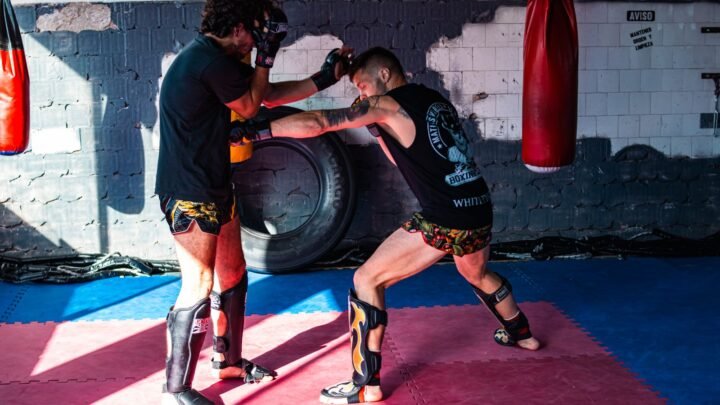
- Don’t ego-spar. If sparring is offered early, go light. The goal is timing and control, not knockouts.
- Sleep and eat enough. Muay Thai is demanding conditioning work; recovery matters as much as the training itself.
If you’re building a home routine alongside gym classes, the home training hub has options for shadowboxing and bag work on off days, and our guide on jumping rope like a boxer is a great low-impact conditioning add-on.
Safety basics every beginner should know
Muay Thai is a contact sport, and injuries happen, but most beginner injuries are avoidable with sensible habits. Always train under a qualified coach rather than trying to learn technique from videos alone, particularly for clinch work and kicking mechanics. Warm up properly before kicking pads or bags at full effort, and don’t skip the cool-down and stretching.
Wear a properly fitted mouthguard any time there’s pad holding, sparring, or bag work involving punches, and never skip hand wraps under gloves. If you have any pre-existing joint issues, mention them to your coach before your first session so they can adjust drills for you. For general guidance on safe exercise progression, resources from bodies like the CDC’s physical activity guidance are a solid general reference, though nothing replaces in-person coaching for a contact sport.
If sparring is on the table in your first month, ask your gym about their beginner sparring policy. A responsible gym will pair you with experienced partners who know how to go light and control contact.
Starter gear checklist
You don’t need to buy everything before your first class. Most gyms have loaner gloves and pads for trial sessions. But once you’re committed, here’s what’s worth owning:
- Twins Special hand wraps for wrist and knuckle support under gloves — see our top 10 best hand wraps for Muay Thai for more options.
- Venum Challenger mouthguard to protect your teeth during pad work and sparring.
- Fairtex Muay Thai gloves, a solid beginner pair — check our top 10 best Muay Thai gloves and glove size guide before buying.
- Twins Special shin guards once you start sparring or heavier pad work — our guide to picking your first shin guards explains fit and padding levels.
- Venum Muay Thai shorts for full range of kicking motion — browse the top 10 best Muay Thai shorts if you want more picks.
- McDavid ankle support if you have prior ankle issues — see the top 10 best ankle supports for Muay Thai for details.
Curious how Muay Thai gloves differ from boxing gloves before you buy? Our breakdown of Muay Thai gloves vs boxing gloves explains the padding and wrist support differences. And once your gear starts smelling less than fresh, our guide on how to clean and deodorize boxing gloves applies to Muay Thai gloves too.
What to expect after month one
By the end of month one, most beginners can throw a reasonably clean jab-cross-low kick combination, hold a decent guard while moving, and last through a full class without gassing out completely. You’ll probably still be self-conscious about your kicks looking awkward, and that’s completely normal; everyone’s early kicks look stiff.
From here, consistency matters more than intensity. Sticking with 2-3 classes a week for three to six months will do more for your skill level than any amount of gear or YouTube tutorials. If you want to explore related disciplines down the line, our protection gear hub and recovery and conditioning hub are worth a look as your training volume increases.
Frequently asked questions
Do I need to be fit before starting Muay Thai?
No. Classes are designed to build fitness gradually, and coaches expect beginners to need breaks. Showing up consistently will improve your conditioning faster than trying to get fit before you start.
How often should a beginner train in the first month?
Two to three sessions a week is a sensible starting point. It’s enough to build the habit and see progress without overloading joints and shins that haven’t adapted yet.
Will I spar in my first month?
It depends on the gym, but many hold off on sparring for new students until basic technique and control are established, sometimes a few weeks in. When it does start, it should be light and coach-supervised.
Why do my shins hurt so much after kicking pads?
Kicking with the shin puts stress on bone and soft tissue that isn’t used to that kind of impact. Mild soreness is normal and improves with gradual, consistent training; sharp or worsening pain should be checked out rather than trained through.
What gear do I actually need for my first class?
Most gyms just want you to bring hand wraps and a mouthguard, since they usually have loaner gloves and pads. Once you’re committed to regular training, invest in your own gloves, shin guards, and shorts.
Is Muay Thai good for weight loss and general fitness?
It’s a demanding full-body workout that combines striking, footwork, and conditioning drills, so many people find it effective for improving fitness and burning calories. Results depend on consistency, diet, and training intensity, and it’s not a substitute for medical or nutritional advice.